Did you know that nearly 30% of healthcare organizations struggle with their technology systems? These systems often hinder operational efficiency. For healthcare professionals, understanding clinic system architecture is key to improving patient care and streamlining operations.
In today’s fast-paced medical world, a well-designed healthcare network is critical. It ensures all components work together seamlessly. By exploring clinic system architecture, you’ll see how technology drives better healthcare outcomes and operational success.
Key Takeaways
- Clinic system architecture integrates various components for efficiency.
- A cohesive healthcare network design is vital for patient care.
- Proper patient data management enhances clinical workflows.
- Understanding the layers of architecture can improve operational efficiency.
- Technology is essential in navigating modern healthcare challenges.
Understanding Clinic System Architecture
Clinic system architecture is a framework that shows how healthcare technologies work together. It improves patient care and makes administrative tasks easier. It includes infrastructure, applications, data management, and compliance.
For clinic administrators, knowing about healthcare IT architecture is key. It helps them choose IT solutions that meet their goals. Each part of the architecture helps different systems talk to each other smoothly.
A good digital health framework boosts efficiency and patient care. It makes clinics more adaptable to new needs. This is thanks to the integration of healthcare software.
Key Components of Healthcare Network Design
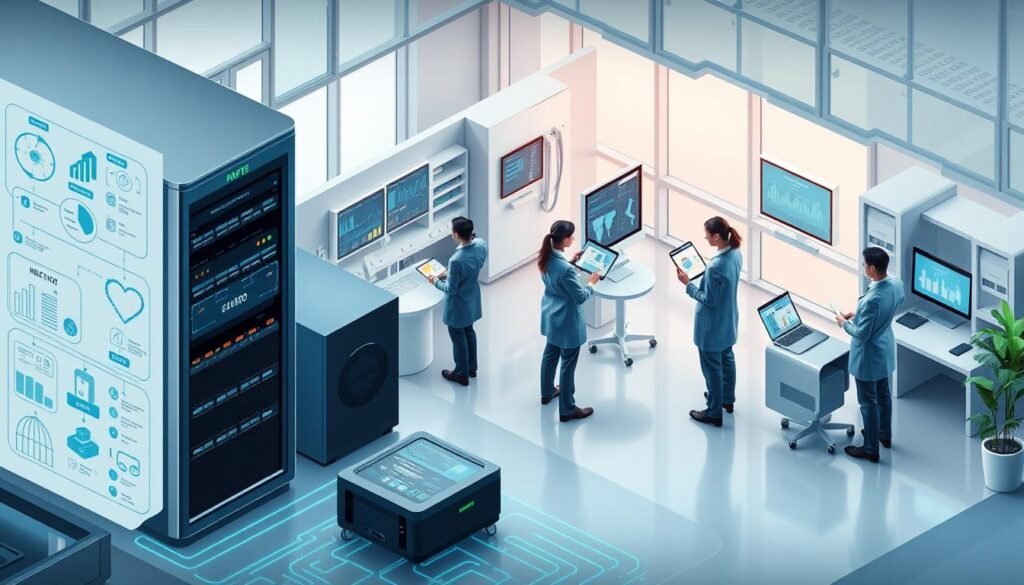
Understanding the key parts of healthcare network design is vital. It helps in creating a strong medical practice technology infrastructure. Two main parts are application systems and data integration technologies. These tools are key to ensuring healthcare professionals can give the best care to patients.
Application Systems
Application systems include software for clinical work. This includes Electronic Health Records (EHR), Laboratory Information Systems (LIS), and Picture Archiving and Communication Systems (PACS). These systems are essential for managing patient data and improving communication among healthcare providers.
Investing in good hospital technology solutions helps manage data better. This ensures healthcare professionals have the latest information for making decisions.
Data Integration Technologies
Data integration technologies help systems talk to each other. They make sharing and accessing data easy. This leads to a complete view of patient information.
Good integration makes the user experience better and helps in making clinical decisions. With a well-designed healthcare network, patient outcomes improve, and work becomes more efficient.
Domain Layer: Data to be Processed in Healthcare
The domain layer is key in managing healthcare data. Healthcare professionals need to understand personal and non-personal data. This knowledge helps in setting up healthcare IT and integrating clinical data well.
Types of Data: Personal vs. Non-Personal
Personal data includes identifiable patient info like names and medical histories. It needs strict privacy rules. Non-personal data, like population health metrics, is safe and useful for understanding health trends.
Standardized vs. Non-Standardized Data
Data can be standardized or not. Standardized data, like HL7 FHIR, makes sharing easier. Non-standard data can slow down sharing and cause errors. Using standardized data helps healthcare systems work better.
| Data Type | Characteristics | Impact on Healthcare IT |
|---|---|---|
| Personal Data | Identifiable information, sensitive content | Requires stringent security measures |
| Non-Personal Data | Aggregated, anonymized information | Enhances population health insights |
| Standardized Data | Consistent formats (e.g., HL7 FHIR) | Improves interoperability and data accuracy |
| Non-Standardized Data | Diverse formats lacking uniformity | May lead to miscommunications and inefficiencies |
Clinic System Architecture: The Logical Tool Layer
The logical tool layer is key in any medical facility. It includes important parts that work well together. Knowing these parts helps make operations smoother and care better.
Each part, like electronic health records and imaging systems, plays a special role. They all help make the hospital’s digital setup strong.
Application Components Overview
Application components are the heart of a medical facility. They help with important tasks in healthcare. These parts can be divided into:
- EHR Systems: Keep patient data in one place for easy access.
- Scheduling Software: Helps manage appointments better.
- Billing Systems: Makes financial tasks easier.
- Telehealth Platforms: Allows doctors to talk to patients from afar.
When these apps work together well, care gets better. This is because there are fewer mistakes and a better experience for patients.
Interoperability in Application Systems
Interoperability is very important in healthcare apps. It means systems can share information easily. This helps doctors get the data they need quickly.
Without it, data can get stuck in silos. This can be dangerous for patients and make things less efficient.
To solve these problems, we need systems that work together well. This means making sure they meet both clinical needs and rules. By doing this, healthcare can become more connected and effective, leading to better health outcomes.
Physical Tool Layer: Infrastructure for Medical Facilities
The physical tool layer is key to a clinic’s system architecture. It focuses on the medical facility’s infrastructure. This includes servers, storage devices, and networking equipment. These are essential for running software applications smoothly and for daily operations.
Investing in strong hospital technology solutions boosts efficiency and patient care. A solid healthcare IT architecture is the foundation of modern medical facilities. It allows for the use of advanced technologies like artificial intelligence and machine learning. These technologies can greatly improve processes and decision-making.
It’s important to regularly check and update the infrastructure. Staying current with new technologies ensures compatibility and meets standards and regulations. A well-planned infrastructure is vital for the long-term success of healthcare organizations.
Optimizing Clinical Workflow
Optimizing clinical workflow means making healthcare operations more efficient. It involves using technology to better manage clinical and administrative tasks. This helps healthcare staff spend more time on patient care and less on paperwork.
Process Integration and Efficiency
Improving process efficiency starts with finding key areas for integration. When clinical and operational systems work together, it makes things smoother for everyone. This integration ensures information moves well between departments, cutting down on delays and boosting service quality.
Healthcare Software Integration Techniques
Using healthcare software integration is key to linking different applications in a clinic. This connection helps systems like EHRs, billing, and scheduling work better together. As healthcare moves towards more patient-focused care, integration plays a big role in keeping workflows efficient.
| Integration Technique | Description | Benefits |
|---|---|---|
| API Integration | Using application programming interfaces to connect disparate systems. | Enables real-time data sharing and minimizes errors. |
| Middleware Solutions | Using software that acts as a bridge between different systems. | Facilitates compatibility and supports data translation. |
| HL7 Standards | Implementing Health Level Seven standards for data exchange. | Ensures consistent data formats and improves interoperability. |
The Role of Patient Data Management in Clinic Systems
Effective patient data management is key to successful clinic systems. It keeps patient info accurate, easy to access, and safe. Good patient data management helps healthcare teams work better together, leading to better care.
But, managing patient data can be tough due to different systems. This makes it hard to give smooth care. By using strong patient data management, clinics can solve these problems. This leads to better care coordination and follows important rules.
Strong patient data systems help clinics keep data top-notch. Using the best practices improves care and makes patients trust their doctors more. A secure login, like the one at Longevity Health Plans, shows how important keeping data safe is.
| Key Benefits of Patient Data Management | Impact on Healthcare Network Design | Effect on Clinical Data Integrity |
|---|---|---|
| Enhances data accuracy | Streamlines information flow between providers | Reduces errors in patient records |
| Improves data accessibility | Facilitates timely interventions and decisions | Ensures reliability of clinical information |
| Strengthens data security | Protects sensitive patient information | Builds patient confidence in care delivery |
The importance of patient data management grows as healthcare changes. It’s essential for clinics to meet new rules and give the best care possible.
Conclusion
Understanding clinic system architecture is key for healthcare pros. It helps improve service delivery and efficiency in today’s complex world. A strong healthcare IT architecture supports new tech and smooth data flow, leading to better patient care.
Knowing how infrastructure, tools, and apps work together helps you make big changes. These changes can greatly improve care quality and how things run.
A well-organized digital health framework is very important. It lets clinics quickly adjust to new patient needs and rules. By focusing on making your clinic system better, you help your team work more efficiently and effectively.
Looking ahead, forming partnerships is vital for healthcare success. Companies like Longevity Health Plans offer the support needed for this change. They help clinics and organizations ready to move forward.
By adding new solutions to your clinic system, you meet today’s needs and prepare for tomorrow’s. This puts your healthcare facility in a strong position for the future. For more info, visit Longevity Health Plans.