
Did you know over 60% of compounding pharmacies in the U.S. are 503A? Yet, many healthcare pros don’t know the difference. It’s key to understand 503A and 503B to follow the Federal Food, Drug, and Cosmetic Act (FD&C Act). This is because past incidents showed we need strict rules.
This guide will help you understand what these designations mean. It will also show how they affect patient safety and how we make medicines.
Learning about 503A vs 503B can improve your work. You’ll know which medicines are safe for your patients. We’ll look at 503B outsourcing and the main differences between 503A and 503B. This will help you make better choices for your patients.
Key Takeaways
- The majority of compounding pharmacies operate under the 503A designation.
- Understanding the 503A vs 503B explanation is vital for compliance and patient safety.
- Past incidents have highlighted the need for regulatory oversight in compounding practices.
- Each designation has distinct roles and responsibilities within the healthcare system.
- Proper knowledge can significantly enhance pharmaceutical practices in healthcare settings.
Understanding Compounding Pharmacies
Compounding pharmacies are key in making medicines fit each patient’s needs. They create custom prescriptions that standard options can’t provide. Knowing about compounding is vital when looking at 503A vs 503B regulations and healthcare progress.
Definition of Compounding
Compounding means making personalized medicines for patients. It can involve changing existing drugs or making new ones. When we talk about what is 503A pharmacy, it’s about places that do traditional compounding. They make medicines just for one patient, solving issues like allergies or dosage problems.
Role in Healthcare
In healthcare, compounding pharmacies are vital. They help doctors give patients the right medicine. This leads to better care, more patient satisfaction, and better health outcomes. Knowing 503A vs 503B regulations ensures these pharmacies follow the law, keeping medicines safe and effective.
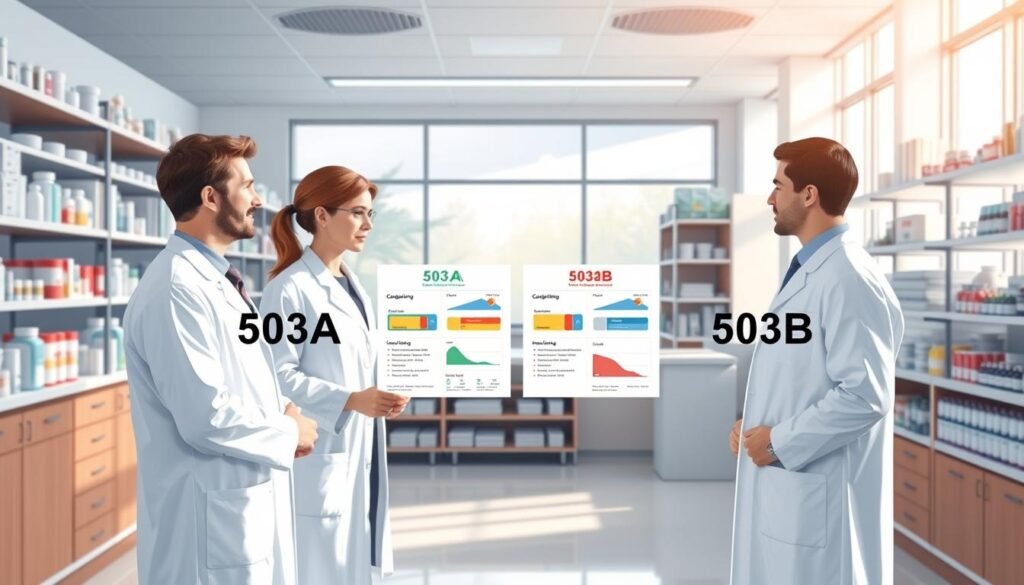
What is 503A Pharmacy?
503A pharmacies are special places that make medicines just for you. They use your doctor’s prescription to create drugs that fit your needs. This makes healthcare more personal and effective.
Characteristics and Functions
503A pharmacies have unique traits that set them apart. They include:
- They make medicines just for you, based on your doctor’s prescription.
- They can make many different kinds of medicines.
- They follow the rules of the state where they are located.
- They don’t have to follow strict federal rules.
This lets 503A pharmacies meet specific needs of patients. This is different from 503B facilities. Knowing these differences helps us understand the importance of 503A vs 503B compliance.
Regulatory Compliance and Standards
Rules are very important for 503A pharmacies. They must follow the U.S. Pharmacopeia (USP) and state laws. They don’t have to follow strict federal rules, which makes things simpler for them.
Here’s a table that shows the main rules for 503A and 503B pharmacies:
| Feature | 503A Pharmacy | 503B Outsourcing Facility |
|---|---|---|
| Preparation Method | Patient-specific compounding | Batch production |
| Regulatory Framework | State regulations and USP standards | Must comply with cGMP |
| Production Limits | Limited batch quantities | Larger batch production |
| Intended Use | Personalized medications | Commercial distribution of compounded drugs |
Understanding these differences helps healthcare workers. It ensures they follow the best ways to care for patients.
What is 503B Outsourcing Facility?
A 503B outsourcing facility makes a lot of compounded medications at once. They don’t need a prescription for each patient. These places are key for clinics and doctors who need a steady supply of medicine.
It’s vital to know the 503B compounding requirements to keep patients safe. This is because some big health issues showed we need to watch these places more closely.
Overview of Responsibilities
503B facilities make medicines that doctors need. They follow strict rules to make sure the medicines are good and safe. They test each batch to check its strength and how long it lasts.
These places must be reliable and focus on making high-quality medicines. The main difference between 503A and 503B is how big they are and the rules they follow. Working with trusted partners can help them do their job better.
Regulatory Framework Under cGMP
The FDA watches over 503B facilities. They must follow Current Good Manufacturing Practices (cGMP). This means they have to check their processes, keep their environment clean, and track how well they’re doing.
These rules help make sure the medicines are always the same and safe for people to take. Facilities have to keep checking themselves to make sure they’re doing things right. Working with good partners helps them deal with these rules better. To learn more about finding the right pharmacy, visit our pharmacy partnership application.
503A vs 503B Explained
It’s important for healthcare providers to know the difference between 503A and 503B facilities. These differences help in making better choices when it comes to medication. The main differences are in how they operate and the rules they follow, which affect patient care.
Key Differences Between 503A and 503B
503A and 503B pharmacies differ mainly in how much medication they can make and the rules they follow. 503A facilities make medications for specific patients, up to 250 units at a time. This focus on individual patients means they can tailor treatments to meet each patient’s needs.
503B facilities, on the other hand, can make more medication at once. They make it for many patients and send it to different healthcare places. They follow strict FDA rules to ensure the quality and safety of their medications.
Intended Use of Medications
Medications from 503A pharmacies are made for specific patients. This ensures treatments are personalized and effective for each person. These medications are key to certain treatments for individual patients.
Medications from 503B facilities are made in bulk for many patients. This helps meet the needs of more people efficiently. They make sure these medications are safe and work well by following strict 503A vs 503B regulations.
| Feature | 503A Pharmacy | 503B Outsourcing Facility |
|---|---|---|
| Primary Purpose | Patient-specific use | Bulk medications for healthcare providers |
| Batch Size Limit | 250 sterile units | Large-scale batches |
| Regulatory Oversight | State Boards of Pharmacy | FDA under cGMP |
| Typical Clients | Individual patients | Healthcare institutions |
Regulations Surrounding 503A and 503B
It’s key to know the rules for 503A and 503B facilities to keep pharmaceutical compounding standards high. These facilities face different rules and must follow specific guidelines. Here, we dive into what each type needs to do to comply.
Compliance Requirements for 503A Pharmacies
503A pharmacies mainly follow state laws and the United States Pharmacopeia (USP) guidelines. They also need to meet the Federal Food, Drug, and Cosmetic (FD&C) Act standards. Each pharmacy must register with the state board of pharmacy and keep detailed records of their work.
They must ensure the medicines they make are pure and strong. Regular checks and record balancing are part of their compliance. This ensures patient safety and quality.
Compliance Requirements for 503B Facilities
On the other hand, 503B facilities must follow federal rules set by the FDA. They must comply with 21 CFR Parts 210 and 211, which cover current Good Manufacturing Practices (cGMP). These facilities go through strict inspections and must prove their compounding methods and product quality.
This strict oversight affects many parts of their work, from getting raw materials to documenting every step in production. The strict rules highlight the need for high-quality standards in compounding.
| Aspect | 503A Pharmacies | 503B Facilities |
|---|---|---|
| Regulatory Authority | State Board of Pharmacy | FDA |
| Key Regulations | USP Guidelines | 21 CFR Parts 210 & 211 |
| Inspections | State-level audits | Regular FDA inspections |
| Documentation Requirements | Maintaining compounding records | Extensive validation of processes |
| Quality Control | Internal checks | Rigorous external standards |
Benefits and Challenges of Each Facility Type
Compounding pharmacies are divided into two main types: 503A and 503B. Each has its own strengths and weaknesses. Knowing these can help you decide what’s best for your pharmacy.
Advantages of 503A Compounding Pharmacies
503A pharmacies are key in making custom medicines for patients. They offer:
- Lower Operational Costs: They spend less on rules, so they can focus on patient care.
- Custom Formulations: They make special medicines for each patient’s needs.
- Quicker Turnaround: They can make medicines fast, which is great for emergencies.
Challenges Faced by 503B Outsourcing Facilities
503B facilities make and send out more medicines. But they face:
- Higher Startup Costs: Starting up costs a lot because of the need for special equipment and rules.
- Stricter Compliance Obligations: They have to follow stricter rules, which can be hard.
- Regulatory Risks: They might face more checks, so following rules closely is key.
503A and 503B pharmacies have different strengths and weaknesses. 503A pharmacies focus on personal care, while 503B facilities handle more medicines. Understanding these differences is important for better patient care and following healthcare rules.
| Feature | 503A Compounding Pharmacies | 503B Outsourcing Facilities |
|---|---|---|
| Operational Costs | Lower | Higher |
| Production Volume | Smaller Scale | Larger Scale |
| Custom Formulations | Yes | Limited |
| Regulatory Oversight | Less Stricter | More Stricter |
Conclusion
It’s key for healthcare pros and clinic bosses to know the difference between 503A and 503B. Each facility has its own role, meeting patient needs while following strict rules. This knowledge helps in giving top-notch care and quality meds.
As healthcare gets more complex, working with pharmacy experts is a big plus. They help navigate the rules for 503A and 503B, keeping your clinic on track. This way, you protect your clinic and make smart choices about products.
In short, staying up-to-date on 503A and 503B rules helps your clinic stand out. It makes you a go-to for personalized healthcare. Your dedication to these rules is the foundation for lasting success in giving safe, effective meds.