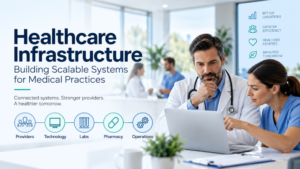
Did you know over 80% of healthcare groups struggle with managing their systems? This shows the need for better ways to handle Management Services Organizations (MSOs) and infrastructure. As scaling clinics gets harder, it’s key for leaders to build strong systems that help both clinical work and operations.
This guide will show you how to manage MSO & infrastructure well when scaling clinics. You’ll learn about MSO benefits, how to make operations better, and how to solve common healthcare problems. By improving in these areas, you can make your healthcare management better and more sustainable.
Key Takeaways
- Understanding the critical role of MSOs in healthcare operations.
- Identifying effective strategies to enhance operational efficiency.
- Leveraging technology for clinic optimization.
- Establishing best practices for scaling clinics.
- Recognizing common challenges and effective solutions in scaling operations.
Understanding the Role of MSOs in Healthcare
Management Services Organizations (MSOs) are key in healthcare. They offer management and administrative support to healthcare providers. This partnership boosts operational efficiency and lets clinical practices focus on patient care.
Knowing the benefits of MSOs can change the game for healthcare administrators. It helps streamline operations and improve service delivery.
The Definition of Management Services Organizations
MSOs are designed to support healthcare providers with non-clinical operations. They bridge the gap between medical practices and financial resources. By outsourcing admin tasks, practices can focus on patient care and treatment outcomes.
They also gain access to more financial resources.
Benefits of MSOs for Clinical Practices
MSOs offer more than just admin help. Key benefits include:
- Relief from Administrative Burdens: MSOs handle tasks, freeing up clinical staff for patient interactions.
- Access to Capital: MSOs help secure funding, aiding in scaling and expanding services.
- Operational Efficiency: With healthcare management expertise, MSOs improve workflows and patient satisfaction.
- Regulatory Compliance: MSOs ensure practices meet legal standards, reducing violation risks.
Integrating MSOs into a clinic’s structure helps with sustainable growth. By using MSO services, healthcare providers can balance clinical excellence with operational success.

| Benefits | Details |
|---|---|
| Relief from Administrative Burdens | Allows clinical professionals to concentrate on patient care. |
| Access to Capital | Enables growth and expansion of services through external investments. |
| Operational Efficiency | Streamlines processes to enhance patient experience. |
| Regulatory Compliance | Ensures adherence to laws and mitigates risk. |
Key Elements of Infrastructure for Scaling Clinics
Building a strong infrastructure for growing clinics is key. It creates a solid base for all operations and makes growth smoother. A good infrastructure ensures workflows are consistent and technology works well together.
As clinics get bigger, they face new challenges. These include hiring staff, managing different electronic health records, and keeping costs down.
The Importance of a Strong Operational Backbone
A strong operational backbone is vital. It helps clinics run smoothly by setting clear standards. This backbone makes communication and teamwork better among staff.
It also helps manage resources well, improving patient care and clinic efficiency. A solid backbone ensures everything works towards growth.
How Infrastructure Supports Patient Care
Good infrastructure is key for better patient care. It connects systems, making it easy to share patient info. This leads to higher quality care and a better patient experience.
Streamlined processes also mean less waiting and less paperwork. This lets healthcare providers focus on what matters most: helping patients. A well-built infrastructure is essential for clinics to succeed and provide the best care.
MSO & Infrastructure, Scaling Clinics, Systems, Operations
To grow clinics, you need both business and clinical skills working together. Management Services Organizations (MSOs) help make this happen. They let clinics focus on care while handling the business side. This mix is key for any clinic looking to grow.
Integrating Business and Clinical Functions
Business and clinical work can be tough to mix. MSOs make it easier by supporting both areas. This way, clinics can focus on patients while running smoothly. It’s all about working together for better care.
Balancing Autonomy and Operational Efficiency
Healthcare providers need to make their own decisions for patient care. But, they also need to work efficiently. MSOs help clinics be independent while keeping things running well. This balance helps everyone do their best, leading to better care and clinic success.
Operational Efficiency in Healthcare Management
Improving operational efficiency in healthcare means looking closely at how things are done now. By using smart strategies, you can make your healthcare team work better. This leads to better care for patients and using resources wisely.
Strategies for Improving Operational Workflow
To boost operational efficiency, try these strategies:
- Use AI to handle routine tasks, so staff can focus on patient care.
- Make processes the same everywhere to cut down on mistakes.
- Train staff well so they know the best ways to do things.
- Look at how long it takes to see patients and find ways to speed things up.
Metrics for Measuring Efficiency
It’s key to have good metrics to see if your efforts are working. Important ones include:
| Metric | Description |
|---|---|
| Time Spent on Administrative Tasks | Shows how much time staff spends on tasks not directly related to patient care. |
| Patient Throughput | Counts how many patients are seen in a set time, showing how busy you are. |
| Cost per Encounter | Finds the average cost for each patient visit, helping with budgeting. |
Keeping an eye on these metrics helps spot problems. This way, you can make smart choices to improve how things run in healthcare.
Clinic Optimization through Systems Integration
In today’s fast-changing healthcare world, making clinics more efficient is key. By using systems integration and automating tasks, clinics can make their workflows smoother. This helps improve how patients are treated and makes care better.
Automating Administrative Tasks
Automating tasks like billing and scheduling changes how clinics run. It makes these tasks more accurate and saves staff time. This means they can spend more time on what matters most: caring for patients.
The Role of Technology in Clinic Optimization
Technology is vital for clinics to work better together. It lets them share patient data easily, improving care. By investing in new tech, clinics can grow and stay efficient.
Best Practices for Scaling Clinics Effectively
Clinics looking to grow must keep up with market changes and what patients want. Knowing about patient needs, competitors, and new healthcare ideas helps. This knowledge is key to building a strong, flexible business plan that fits today’s market.
Understanding Market Trends and Demands
To grow clinics well, it’s important to know what’s happening in the market and what patients need. Keeping an eye on industry stats, rules, and how happy patients are helps a lot. This info lets healthcare leaders make their services better to meet patient needs.
Building a Scalable Business Model
Creating a business model that can grow is both a challenge and an opportunity. A good model is flexible and focuses on quality. Using data to make decisions helps plan better. This way, clinics can change with the market without losing quality.
| Best Practices | Description |
|---|---|
| Continuous Market Analysis | Regularly assess patient demographics and healthcare trends to enhance service offerings. |
| Flexible Operational Frameworks | Design operational structures that can easily adjust to changing market demands. |
| Focus on Quality Care | Prioritize patient satisfaction and outcomes to build long-term loyalty and trust. |
| Data-Driven Decision Making | Utilize analytics to make informed strategic choices that support growth and scalability. |
Overcoming Challenges in Scaling Operations
Scaling operations in healthcare comes with many challenges. Finding these roadblocks early helps in using the right management strategies. Solving issues like not having enough resources and complex operations is key to growing successfully.
Identifying Common Roadblocks
Clinics often hit obstacles that slow their growth. Common challenges include:
- Not having enough resources to operate fully
- Workflows that are not consistent, affecting service quality
- Dealing with different rules in each area
- Staff not being trained well, leading to less efficiency
Knowing these challenges helps clinics change their strategies to grow better. Being proactive is key to overcoming these obstacles.
Solutions for Managing Growth
There are practical ways to tackle scaling challenges. Some actions include:
- Creating detailed training plans to improve staff skills
- Connecting operational systems for smooth work across locations
- Working with financial partners, like Management Services Organizations, to use resources better
- Creating clear plans for bringing in new staff and providers
By taking a strategic approach to growth, clinics can handle the complex process of expanding. For more on scaling in healthcare, check out what Management Services Organizations can do.
Conclusion
To optimize MSO and infrastructure is key for growing clinics. Healthcare leaders must understand MSOs’ role. This lets them use strategies to boost efficiency.
By following best practices, clinics can grow and keep patient care top-notch. This is important for long-term success.
Working together on business and clinical sides improves operations. This leads to better patient care. It also helps clinics expand successfully.
Improving your healthcare practice means focusing on both clinical goals and operational strength. This dedication helps your clinic grow and strengthens your healthcare strategy.