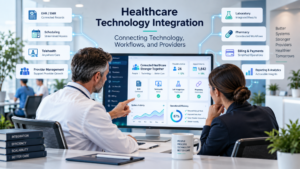
Studies reveal that over 60% of healthcare workers think that slow admin tasks hurt patient care quality. This shows how urgent it is for healthcare groups to use clinical automation systems. With new healthcare tech, providers are using medical automation software to make things smoother, more accurate, and handle more complex patient needs.
As the need for better care grows, using these systems helps solve staff shortages. It also boosts patient results and staff happiness.
Key Takeaways
- Clinical automation systems can improve efficiency and reduce operational costs.
- Healthcare automation solutions enhance the overall patient experience.
- Implementing medical automation software can minimize human errors.
- These systems enable better integration of patient data for informed decision-making.
- The adoption of clinical automation aligns with the push for higher-quality care delivery.
Understanding Clinical Automation Systems
Clinical automation systems are key in today’s healthcare. They automate tasks, making workflows more efficient and accurate. This helps healthcare professionals focus more on patient care.
Definition and Importance
Clinical automation systems use technology to improve healthcare workflows. They aim to reduce administrative tasks and increase data accuracy. This lets healthcare workers spend more time on patient care.
Types of Clinical Automation Systems
There are many types of automated medical systems. Each has its own role in supporting healthcare workers. Here are a few examples:
- Electronic Medical Records (EMR): These systems securely store patient data and simplify managing patient information.
- Automated Scheduling Tools: These applications make booking appointments easier, reducing scheduling conflicts.
- Patient Management Systems: These solutions track patient interactions and care plans, ensuring care continuity.
These systems are constantly evolving. Advances in AI and machine learning are making them more advanced. This leads to better decision-making and personalized patient care.
Benefits of Clinical Automation Systems in Healthcare
Clinical automation systems bring many benefits to healthcare. They make operations run smoother and improve patient care. Automation helps make workflows better, boosts efficiency, and cuts down on errors.
Improved Efficiency and Cost Reduction
Clinical automation makes healthcare operations more efficient. It saves money by reducing the time spent on administrative tasks. These tasks often take up a big part of healthcare budgets.
Medical device automation helps cut down on tasks that take away from caring for patients. This leads to better health outcomes for patients.
Enhanced Patient Experience
Automated patient care systems change the way patients experience healthcare. They make waiting times shorter and scheduling easier. Patients also get more personalized care.
Chatbots help answer questions quickly, making patients happier. This makes healthcare providers stand out in patient care.
Reduction of Human Errors
One big plus of clinical automation is it cuts down on mistakes. It makes clinical documentation and medication management safer. This means fewer errors for patients.
With automation, patient data is more accurate. This builds trust between healthcare providers and their patients.
| Benefit | Impact on Operations | Patient Outcome |
|---|---|---|
| Improved Efficiency | Streamlined processes reduce operational costs | Faster service delivery |
| Enhanced Patient Experience | Personalized care through quick communication | Increased patient satisfaction |
| Reduction of Human Errors | Automation ensures accurate data management | Higher patient safety and trust |
Key Components of Clinical Automation Systems
Understanding the core parts of clinical automation systems is key to improving healthcare. Two main parts are electronic medical records (EMR) automation and automated patient care systems. These parts are vital for better efficiency and safety in healthcare.
Electronic Medical Records (EMR) Automation
EMR automation makes documenting patient information easier and faster. It lets doctors quickly access important patient data. With features like speech recognition and automated data entry, it cuts down on errors and saves time.
This means doctors can spend more time with patients. It makes the care experience better for everyone.
Automated Patient Care Systems
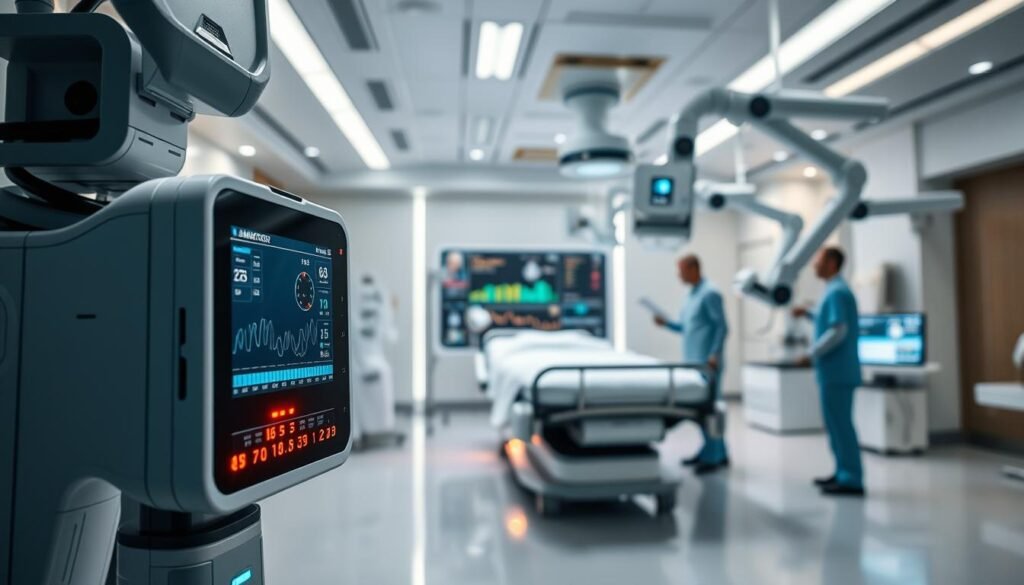
Automated patient care systems are essential for managing healthcare workflows. They help monitor patient health and manage treatments. For example, smart infusion pumps are a key part of healthcare automation.
They reduce the chance of medication mistakes. These devices watch patient health in real-time. They ensure patients get the best care possible.
Challenges Facing Implementation of Clinical Automation Systems
Putting clinical automation systems in place is tough for healthcare groups. They face the hurdle of fitting into today’s tech while dealing with old systems. Many clinics and hospitals use outdated tech, making it hard to integrate new systems.
This leads to broken workflows and limited data sharing. It’s a big problem.
Integration with Legacy Systems
Old systems often work alone, making it hard to automate workflows smoothly. These outdated techs block efficient data sharing. This creates info silos that hurt patient care and decision-making.
Healthcare groups need to check their systems and plan for integration or replacement. This is key for better communication and teamwork.
Data Quality and Interoperability Issues
Data quality problems happen when info isn’t recorded or updated right. This can mess up how well automation works. Also, data sharing standards vary, making integration tough.
Healthcare providers must clean and standardize data. This is essential for getting the most out of clinical automation systems.
By tackling these issues and improving data sharing, healthcare groups can make clinical automation work. This leads to better patient care and more efficient operations.
Real-World Applications of Clinical Automation Systems
Clinical automation systems are changing healthcare. They make patient care better and processes smoother. These systems use technology to help doctors make decisions faster and work more efficiently.
They also help reduce the workload of healthcare facilities. This makes life easier for everyone involved.
Examples in Triage and Diagnosis
Automated systems quickly analyze patient data. This helps doctors decide how urgent a treatment is. For example, AI can spot serious health issues early.
This leads to quicker and more effective treatments. It can even save lives.
Automation in Administrative Tasks
Automation also helps with administrative tasks. It makes things like scheduling, billing, and paperwork easier. This frees up staff to focus on patient care.
With less time on paperwork, healthcare teams can provide better care. Everyone benefits from this efficiency.
Future Trends in Clinical Automation Systems
Healthcare is changing fast, thanks to new technologies. AI is playing a big role in making healthcare systems better. It helps make care more efficient and improves patient results.
The Role of AI in Clinical Automation
AI is changing how doctors make decisions. It uses machine learning to look at lots of data. This helps doctors make better diagnoses and treatments.
AI helps doctors make quick, smart choices. It also lets them spend more time with patients. This is because AI handles the paperwork and data analysis.
Potential for Personalized Medicine
Personalized medicine is a big step forward. It means treatments are made just for each patient. This makes treatments work better and have fewer side effects.
AI helps keep treatment plans up to date. It uses real-time data to make sure care is always the best. This leads to better care for each patient.
To learn more about these changes in hormone therapy and clinical practices, check out detailed resources.
Conclusion
Clinical automation systems are changing healthcare for the better. They make workflows more efficient, leading to better patient care and healthcare improvements. These systems cut down on mistakes and help doctors make better decisions, improving patient care quality.
But, we need to work on old systems and making data work together better. As technology gets better, using these systems will help healthcare run smoother. This way, doctors can focus more on caring for patients.
Working together and coming up with new ideas is key. Resources like dedicated product support help a lot. By focusing on these areas, we can make healthcare better for everyone in the long run.