
Did you know that about 42% of adults in the United States are obese? This is a big problem that shows we need better ways to improve metabolic health. GLP-1, or glucagon-like peptide-1, is being seen as a key player in this fight. It’s a hormone that can also be used as medicine, like Wegovy® (semaglutide) and Zepbound® (tirzepatide).
These medicines are helping people lose weight and control their blood sugar. This makes GLP-1 therapy very important for better health. In this article, we’ll look at how GLP-1 works and its benefits for everyone.
Key Takeaways
- GLP-1 plays a key role in improving metabolic health.
- Wegovy® and Zepbound® are effective GLP-1 receptor agonists.
- These medicines greatly help control blood sugar.
- GLP-1 therapy also helps with weight loss in people who are obese.
- GLP-1 affects hormone levels and metabolism.
- Using GLP-1 well means combining it with healthy lifestyle changes.
Understanding GLP-1 and its Function
GLP-1, or glucagon-like peptide-1, is a key hormone that affects our metabolic health. It plays a big role in how we handle glucose and manage our appetite. This is why it’s important for treating diabetes and helping with weight loss.
What is GLP-1?
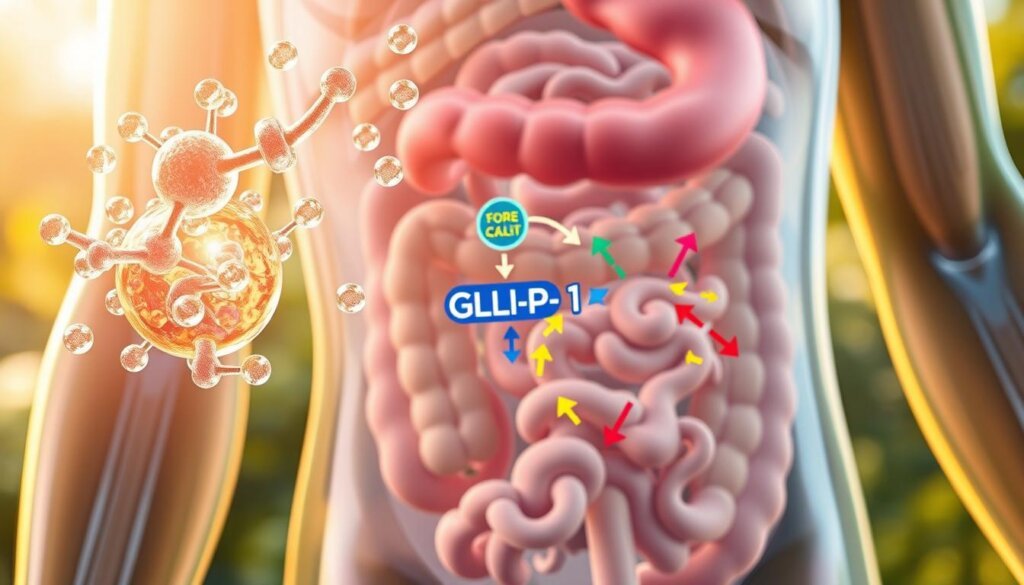
GLP-1 is made in the intestines when we eat. It helps control blood sugar levels and affects how we feel hungry. By making more insulin, GLP-1 helps our bodies handle glucose better. It also helps us eat less, which is good for keeping a healthy weight.
The Role of GLP-1 in Blood Sugar Control
GLP-1 does more than just get made; it helps control blood sugar. When our blood sugar goes up, GLP-1 tells the pancreas to make more insulin. This lowers blood sugar and makes our body’s tissues more responsive to insulin. This helps prevent high blood sugar and aids in managing diabetes.
GLP-1 and Appetite Regulation
GLP-1 is also great at controlling hunger. It slows down how fast food leaves our stomach, making us feel full longer. This is super helpful for people trying to lose weight. Knowing how GLP-1 works can help doctors give better advice on losing weight.
Benefits of GLP-1 Therapy for Weight Loss
GLP-1 therapy is showing great promise in helping people lose weight. It works by improving health and well-being. People using GLP-1 medications often see a big drop in weight and better health markers.
Significant Weight Loss Outcomes
Studies show GLP-1 therapy leads to more than just weight loss. Many people lose 15% to 20% of their body weight. In the first few months, they often lose 10 to 15 pounds.
They also see a big drop in belly fat. This shows how GLP-1 benefits help people make healthier choices.
Improving Insulin Sensitivity with GLP-1
GLP-1 therapy also boosts insulin sensitivity. This makes it easier for the body to use glucose. It lowers the risk of diabetes complications.
It helps with weight management and lowers the risk of type 2 diabetes. It also improves blood pressure and cholesterol levels. This shows the wide range of benefits of GLP-1 therapy.
Overall Health Benefits Beyond Weight Loss
GLP-1 therapy does more than just help with weight loss. It also improves overall health. People using it see fewer heart problems and obesity-related issues.
Sticking with GLP-1 therapy leads to lasting weight control and many health benefits. In a world where obesity is common, GLP-1 therapy is a key step towards better health.
GLP-1 for Metabolic Health
GLP-1 has a big impact on how our body works. It helps keep our energy levels balanced. This is key for our overall health.
How GLP-1 Affects Metabolism and Hormones
GLP-1 works with hormones in our body. It helps make more insulin and less glucagon. This helps control blood sugar levels.
It also makes us feel full by reducing hunger hormones. This balance is important for managing hunger and improving how our body uses energy.
Long-term Health Implications of GLP-1 Use
Using GLP-1 for a long time can help with weight management. It helps lose fat and keep muscle, if we eat right and exercise. This can lower the risk of diseases linked to metabolic syndrome.
Starting GLP-1 therapy can be a smart move for better metabolic health. It’s a way to take care of our body’s needs.
Using GLP-1 Medications Effectively
It’s important to know who can take GLP-1 treatments. These medicines are for people with a high body mass index (BMI) of 30 or more. Or for those with a BMI of 27 and health issues like high blood pressure or diabetes. Knowing who can take GLP-1 treatment qualifications is key to success.
Who Qualifies for GLP-1 Treatment?
To get GLP-1 therapy, patients must meet certain criteria. These include:
- BMI of 30 or higher
- BMI of 27 with obesity-related health issues
- Willingness to incorporate lifestyle changes with GLP-1
Checking these qualifications helps make sure the right people get GLP-1 therapy. Doctors watching over patients can help them get better health results.
Best Practices for Combining GLP-1 with Lifestyle Changes
To get the most from GLP-1 medicines, combining them with lifestyle changes is important. A good plan might include:
- Dietary Adjustments: Eat more nutrient-rich foods and cut down on sugar and unhealthy fats.
- Regular Physical Activity: Aim for at least 150 minutes of moderate exercise each week.
- Collaboration with Professionals: Work with doctors and nutritionists for personalized help.
These steps not only help with weight loss but also improve overall health. Working together on these changes helps make effective GLP-1 use and leads to better metabolic health.
Conclusion
GLP-1 receptor agonists are changing how we manage metabolic health. They help with weight loss, improve insulin sensitivity, and boost overall well-being. The GLP-1 therapy summary shows the importance of the right dosage and lifestyle changes. It also stresses the need for regular talks with healthcare providers.
As scientists learn more about these medicines, the future of GLP-1 treatments looks bright. It promises to open up new ways to help patients. Working together, patients and doctors can achieve great results. This helps manage obesity and other related health issues.
By working as a team, you can make the most of GLP-1 therapies. This leads to a better quality of life. The field is growing, giving hope to those looking for lasting health improvements.