Did you know that about 88 million American adults, nearly 1 in 3, have insulin resistance? This is a big problem that can make losing weight hard. Knowing about insulin resistance can help you improve your health and lose weight more easily.
It’s important to manage insulin resistance by losing weight. This article will give you simple, effective tips to tackle this issue. Learn how to change your health and life for the better.
Key Takeaways
- Understanding insulin resistance is essential for effective weight loss.
- Managing insulin resistance through weight loss can lead to improved health outcomes.
- Multiple factors contribute to insulin resistance, including genetics and inactivity.
- A well-structured diet plays a critical role in managing insulin resistance.
- Regular physical activity enhances weight loss efforts for those with insulin resistance.
- Consulting healthcare professionals can provide personalized strategies for success.
Understanding Insulin Resistance
Insulin resistance is when your body doesn’t use insulin well. This hormone helps control blood sugar levels. Knowing about insulin resistance helps you understand its impact on health and weight.
When cells don’t respond to insulin, the pancreas makes more of it. This can cause blood sugar levels to rise. It can also lead to serious health problems.
What is Insulin Resistance?
Insulin resistance is a metabolic disorder. It makes insulin less effective at getting glucose into cells. About 40% of adults aged 18-44 have it.
As insulin production goes up, the risk of type 2 diabetes and other conditions grows. It’s important to know about it.
How Insulin Resistance Affects Weight
Insulin resistance has a big impact on weight. High insulin levels make the body store more fat, mainly around the belly. This can make it hard to lose weight and may lead to more weight gain.
Understanding this process is key to making lifestyle changes. These changes can help fight the effects of insulin resistance.
Symptoms of Insulin Resistance
Knowing the symptoms of insulin resistance is important. Look out for fatigue, constant hunger, and weight gain, mostly in the stomach. These signs can help you take action to improve your health and manage your weight.
Early detection and making lifestyle changes can help reverse insulin resistance. It’s a big step towards better health.
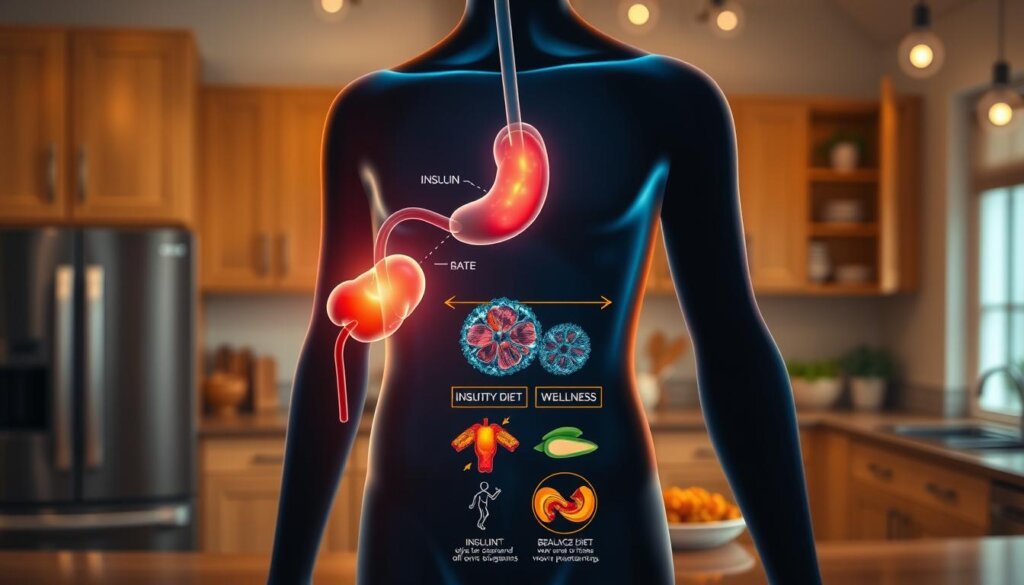
Factors Contributing to Insulin Resistance
It’s important to know what causes insulin resistance. This includes too much body fat, genetics, and not being active enough. Each one affects how well your body uses insulin and your overall health.
Excess Body Fat and Its Impact
Too much body fat, like visceral fat, hurts insulin resistance. This fat is around your organs and messes with hormone signals. It leads to insulin problems. Losing weight is key to better insulin use and health.
Genetic Factors and Family History
Genetics play a big part in insulin resistance risk. If your family has type 2 diabetes or metabolic syndrome, you’re more at risk. Knowing your genetic risk helps in planning early prevention and treatment.
Physical Inactivity and Its Role
Not being active lowers insulin sensitivity. It’s vital to move regularly. Sitting too much can lead to weight gain and worsen insulin resistance. Even a little exercise helps improve insulin use and health.
Weight Loss for Insulin Resistance
Managing weight is key for those with insulin resistance. Losing weight can make your body more sensitive to insulin. This not only boosts your metabolic health but also lowers insulin levels, improving your overall well-being.
Connecting Weight Loss and Insulin Sensitivity
Studies show that losing a little weight can greatly improve insulin sensitivity. By losing weight, your body gets better at using insulin. This can help prevent type 2 diabetes. Using effective weight loss tips is a big part of this health journey.
Importance of a Healthy Weight
Keeping a healthy weight is vital for managing insulin resistance. Too much body fat can raise insulin levels, leading to more problems. By aiming for a healthy weight, you can reduce these risks and live a healthier life.
Effective Strategies for Weight Loss
To lose weight effectively, consider these strategies:
- Set realistic weight loss goals that consider your current health status.
- Track your food intake for better accountability and insights.
- Incorporate regular physical activity into your routine.
- Focus on gradual lifestyle changes for long-term success.
- Consult with healthcare professionals to personalize your weight loss plan.
By following these tips, you can improve your health and lower the risk of insulin resistance complications.
Diet Recommendations for Managing Insulin Resistance
Following the right diet is key to managing insulin resistance and losing weight. Choosing the right foods can boost insulin sensitivity and improve your health.
High Fiber Foods and Their Benefits
Eating high fiber foods is great for insulin resistance. Foods like fruits, veggies, legumes, and whole grains help control blood sugar. They also keep you full, helping you eat less and lose weight.
Healthy Fats to Include in Your Diet
Healthy fats are important for a balanced diet. Foods like avocados, nuts, seeds, and olive oil can make your body more sensitive to insulin. They also help you feel full, making it easier to stick to a healthy diet.
Whole Grains vs. Refined Grains
Choosing whole grains over refined ones is a smart move. Whole grains are packed with nutrients and fiber, which is good for your health and weight. Refined grains, on the other hand, are low in fiber and can harm your insulin sensitivity.
| Food Type | Examples | Benefits |
|---|---|---|
| High Fiber Foods | Fruits, Vegetables, Whole Grains | Stabilizes blood sugar, promotes fullness |
| Healthy Fats | Avocados, Olive Oil, Nuts | Improves insulin sensitivity, reduces cravings |
| Whole Grains | Brown Rice, Quinoa, Whole Wheat Bread | High in fiber, nutrient-dense |
| Refined Grains | White Bread, Pasta, White Rice | Low in fiber, less nutritious |
Physical Activity and Weight Loss
Regular physical activity is key for weight loss and better health. It’s even more important for managing insulin resistance. Different exercises can boost insulin response and help with weight loss. A balanced exercise routine boosts metabolism and helps the body use insulin better.
The Role of Regular Exercise
Regular exercise makes muscles more sensitive to insulin. This helps the body take up glucose better. It also helps keep weight in check and lowers the risk of chronic diseases linked to insulin resistance. Activities that get your heart rate up can greatly improve your health.
Types of Exercise Beneficial for Insulin Resistance
Various exercises offer unique benefits for insulin resistance. Aerobic activities like walking and cycling help with weight loss and heart health. Strength training builds muscle, which increases your resting metabolic rate. Flexibility and balance exercises improve mobility, encouraging more physical activity.
Incorporating Physical Activity into Daily Life
To get the most from exercise, add it to your daily routine. Aim for 150 minutes of moderate-intensity exercise weekly. Small changes like taking the stairs or walking during breaks can help a lot. By doing this, you can enhance insulin sensitivity and achieve weight loss goals.
Best Diet for Insulin Resistance and Weight Loss
Choosing the right diet is key for losing weight and staying healthy. A good diet focuses on foods that help your body use insulin better. It also avoids foods that can slow down weight loss.
Food Groups to Emphasize
To boost insulin sensitivity, eat these foods to emphasize insulin sensitivity:
- Leafy greens such as spinach and kale
- Nuts and seeds including almonds and chia seeds
- High-fiber vegetables like broccoli and carrots
- Whole grains such as quinoa and brown rice
- Lean proteins like chicken, fish, and legumes
Foods to Avoid for Better Insulin Sensitivity
Try to cut down on foods that can make insulin resistance worse. Avoid these foods to avoid insulin resistance:
- Processed foods high in unhealthy fats and sugars
- Refined carbohydrates such as white bread and pastries
- Sugary beverages including soda and fruit juices
- High-fat dairy products like whole milk and cream
Weight Loss Supplements for Insulin Resistance
Some supplements can help with weight management, even for those with insulin resistance. Knowing what’s out there can help you pick the right ones. Ingredients like cinnamon, ginseng, and omega-3 fatty acids might help improve insulin sensitivity and metabolic health.
Popular Supplements and Their Effectiveness
Many supplements are being looked at for their benefits against insulin resistance. Let’s take a closer look at some of the most popular ones:
| Supplement | Potential Benefits | Evidence Level |
|---|---|---|
| Cinnamon | May improve insulin sensitivity | Moderate |
| Ginseng | Supports metabolic health | Moderate |
| Omega-3 Fatty Acids | Reduces inflammation and improves insulin sensitivity | High |
Consulting with Healthcare Professionals
It’s important to talk to healthcare professionals before starting any supplements. They can give advice tailored to your health needs. This ensures the supplements you choose fit into your overall health plan.
For more info on the best supplements for insulin resistance, check out this resource.
Conclusion
Managing insulin resistance through weight loss needs a full plan. Knowing how it affects your body is key. Start by eating more high-fiber foods, healthy fats, and whole grains. This helps improve how your body uses insulin.
Adding regular exercise is also vital. Find activities you enjoy and do them often. This helps you lose weight and stay healthy for a long time. Sometimes, talking to a doctor about supplements can help too.
This summary shows the value of being patient and consistent. By following these steps, you can improve your health and lower disease risks. It’s your roadmap to a healthier, more balanced life.