Did you know over 70 million adults in the U.S. struggle with obesity? This shows the need for good weight management. Many look into GLP-1’s role. Glucagon-like peptide-1, or GLP-1, is a hormone in the gut. It helps release insulin and affects how hungry we feel.
In this section, we’ll see if GLP-1 really helps control appetite. We’ll also look at why healthcare pros need to understand how it works for better care.
Exploring GLP-1 shows its big role in controlling hunger. This is key for fighting obesity and other health issues. Knowing how GLP-1 works can help improve patient care and teamwork in healthcare.
Key Takeaways
- The obesity epidemic affects over 70 million adults in the U.S.
- GLP-1 is a key hormone for controlling hunger.
- GLP-1 therapy can help with weight management.
- Healthcare pros need to understand GLP-1’s role.
- Research backs GLP-1’s ability to reduce hunger.
- GLP-1 could lead to new ways to treat obesity.
Introduction to GLP-1 and Its Role in Appetite Regulation
GLP-1, or glucagon-like peptide-1, is key to understanding how we manage our appetite and weight. It’s released by our intestines after we eat. This hormone helps our body use glucose better by increasing insulin production.
But GLP-1 does more than just help with glucose. It also makes us feel full for longer. This is because it slows down how fast food leaves our stomach. It works with our brain to reduce hunger, helping us eat less.
Doctors need to know about GLP-1’s role in controlling hunger. This knowledge helps them suggest better ways for patients to manage their weight. It’s all about finding the right balance for a healthier life.
Understanding the Mechanism of GLP-1 in Appetite Control
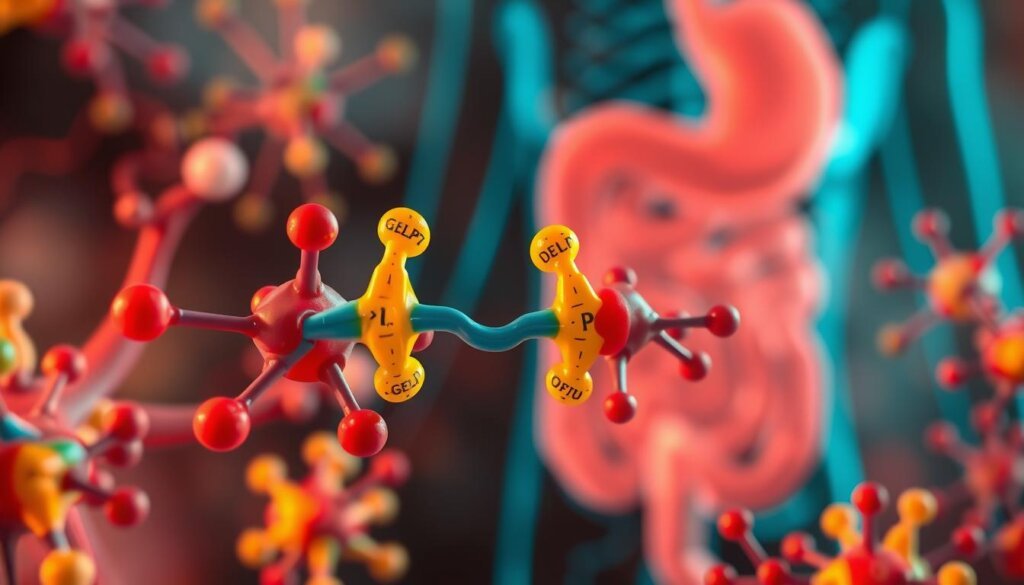
The GLP-1 mechanism of action on appetite is complex. It involves the brain and gut working together. This hormone is key in controlling hunger by affecting specific receptors.
By understanding these interactions, you can see how GLP-1 affects our appetite.
How GLP-1 Interacts with the Brain and Gut
GLP-1 receptors are found in the brain and gut. They send signals that reduce hunger and increase feelings of fullness. Studies show that GLP-1 binding to brain receptors helps control energy intake.
This connection between GLP-1 and hunger is essential for balanced eating.
The Role of GLP-1 in Digestive Processes
GLP-1 also affects digestion. It slows down how fast food moves through the stomach. This makes us feel fuller for longer.
By slowing digestion, GLP-1 helps us feel more satisfied. This is important for managing weight and appetite.
| Aspect | Description |
|---|---|
| GLP-1 Function | Suppresses appetite by activating GLP-1 receptors in the brain. |
| Impact on Gut | Slows gastric emptying to enhance feelings of fullness. |
| Appetite Control | Regulates hunger by influencing hormonal signals related to satiety. |
| Clinical Implications | GLP-1 medications can aid in obesity management and metabolic disorders. |
Does GLP-1 Suppress Appetite? Exploring the Evidence
Research shows GLP-1 is key in controlling hunger and managing appetite. Studies highlight the success of GLP-1 agonists like semaglutide and tirzepatide. They show better appetite control than placebos, making them promising for weight management.
Research Supporting Appetite Suppression
Clinical trials on GLP-1 drugs have shown impressive results. People taking these drugs ate less and felt less hungry. This backs up the idea that GLP-1 helps control appetite. Doctors now see these drugs as helpful for weight loss.
Comparing GLP-1 Agonists with Other Weight Loss Medications
GLP-1 agonists stand out when compared to other weight loss drugs. They offer better appetite control and weight loss. This makes them a strong choice for managing weight, according to research.
Physiological Effects of GLP-1 on Hunger and Satiety
GLP-1 plays a big role in controlling hunger and fullness. It helps manage appetite by regulating insulin and sending signals of fullness. Knowing how GLP-1 works can help us better manage weight and improve metabolic health.
Impact on Insulin and Blood Sugar Levels
GLP-1 helps control insulin levels by stimulating its release after eating. This keeps blood sugar stable, which helps prevent hunger. It also stops the release of glucagon, keeping sugar levels steady.
This balance helps the body respond better to food and improves metabolic health.
The Connection Between GLP-1 and Satiety Signals
GLP-1 sends signals to the brain that we are full. When we eat, GLP-1 tells our brain to stop feeling hungry. This not only reduces hunger but also keeps us feeling full for longer.
Understanding how GLP-1 affects hunger can help doctors teach patients how to manage their appetite and control weight.
| Aspect | Role of GLP-1 | Effect on Hunger |
|---|---|---|
| Insulin Secretion | Stimulates insulin release in response to meals | Helps maintain steady blood sugar, reducing hunger |
| Glucagon Inhibition | Inhibits glucagon secretion | Prevents unnecessary glucose release, stabilizing hunger |
| Satiety Signaling | Activates brain receptors for fullness | Reduces overall appetite and sustains satiety |
Who Can Benefit from GLP-1 Medications?
Knowing who can benefit from GLP-1 medications is key for managing obesity. These drugs help those with weight-related health problems a lot. They are good for many people based on their health and conditions.
Ideal Candidates for GLP-1 Therapy
People with a BMI of 30 or higher often benefit from GLP-1 therapy. Those with a BMI of 27 or more and health issues like diabetes or high blood pressure might also qualify. Finding the right candidates helps doctors give better care.
Health Conditions Associated with GLP-1 Use
GLP-1 medications do more than just help with weight loss. They are great for people with insulin resistance and other health problems related to being overweight. This knowledge helps doctors create treatment plans that work best for each patient.
Potential Side Effects and Safety of GLP-1 Medications
GLP-1 medications help manage weight by understanding their side effects and safety. Knowing the side effects is key to keeping patients safe and improving treatment results.
Common Adverse Effects to Monitor
People taking GLP-1 medications might face several common side effects. These include:
- Nausea
- Vomiting
- Diarrhea
- Abdominal pain
- Gastrointestinal disturbances
Watching for these issues helps doctors keep treatment safe and effective for patients.
Long-term Considerations and Safety Measures
Long-term safety of GLP-1 medications is vital for weight management. Regular check-ups and detailed reviews help check the ongoing safety of these drugs. It’s important for patients to know about possible side effects and report any unusual symptoms.
By staying active in monitoring GLP-1 treatment, healthcare teams create a supportive and reliable environment for patients.
Combining GLP-1 Medications with Lifestyle Changes
Adding lifestyle changes to GLP-1 medications makes them work better for weight management. These meds help control hunger, but they’re even more effective with healthy habits. Together, they lead to better weight control and health.
Dietary considerations are key for managing weight. Eating a diet full of fruits, veggies, whole grains, and lean proteins helps your metabolism. Doctors should help patients create diet plans that fit their needs.
Exercise and GLP-1 therapy are also vital for lasting weight loss. Exercise burns calories, improves mood, and boosts metabolism. Getting patients to enjoy their workouts makes sticking to it easier and more rewarding.
Combining these lifestyle changes with GLP-1 medications creates a strong support system for weight loss. Patients get detailed advice from healthcare experts to help them live healthier. This approach leads to long-term success and better health outcomes.
Conclusion
GLP-1 medications are key in controlling hunger and aiding in weight management. They work by balancing blood sugar levels and reducing hunger. This makes them a great tool for fighting obesity and type 2 diabetes.
These medications start to show their effects in just a few weeks. People often notice they feel less hungry and start losing weight. Studies show that GLP-1 can lead to lasting weight loss when used with healthy lifestyle changes.
Healthcare professionals need to stay up-to-date on GLP-1 benefits and side effects. This knowledge helps them recommend GLP-1 therapy for better health outcomes. For more details on how long GLP-1 takes to work, check out this source.