Did you know nearly 70% of premature deaths in the U.S. are due to preventable chronic diseases? This fact highlights the key role of preventative medicine in our lives. By taking proactive steps, you can lower your risk of these diseases and improve your life quality. Wellness practices help spot health issues early and put medical prevention first in your care.
Exploring preventative medicine shows how being proactive can benefit you and your community for years to come. Learning about preventative strategies helps you make better health choices.
Puntos Clave
- Preventative medicine can significantly lower chronic disease risks.
- Proactive health approaches are essential for improving life quality.
- Incorporating wellness practices helps in early health issue detection.
- Medical prevention protocols serve as a vital healthcare strategy.
- Emphasizing prevention contributes to healthier communities.
Understanding Preventative Medicine Protocols
Preventative medicine is all about stopping diseases before they start. It focuses on health care that prevents problems. This way, people can live healthier lives and enjoy better quality of life.
Definition of Preventative Medicine
Preventative medicine uses strategies to avoid diseases and keep people healthy. It includes regular check-ups, shots, and changes in lifestyle. These steps help reduce health risks.
Historical Perspective on Preventative Care
El history of preventative care shows its importance in health. It has grown from simple hygiene tips to complex programs like vaccines. This growth shows how vital preventive care is in fighting diseases.
Importance of a Proactive Health Approach
Being proactive in health is key to well-being. It involves regular health checks and screenings. This approach helps catch problems early, reducing the chance of chronic diseases. It also means living longer and better.
Key Principles and Practices in Preventative Care
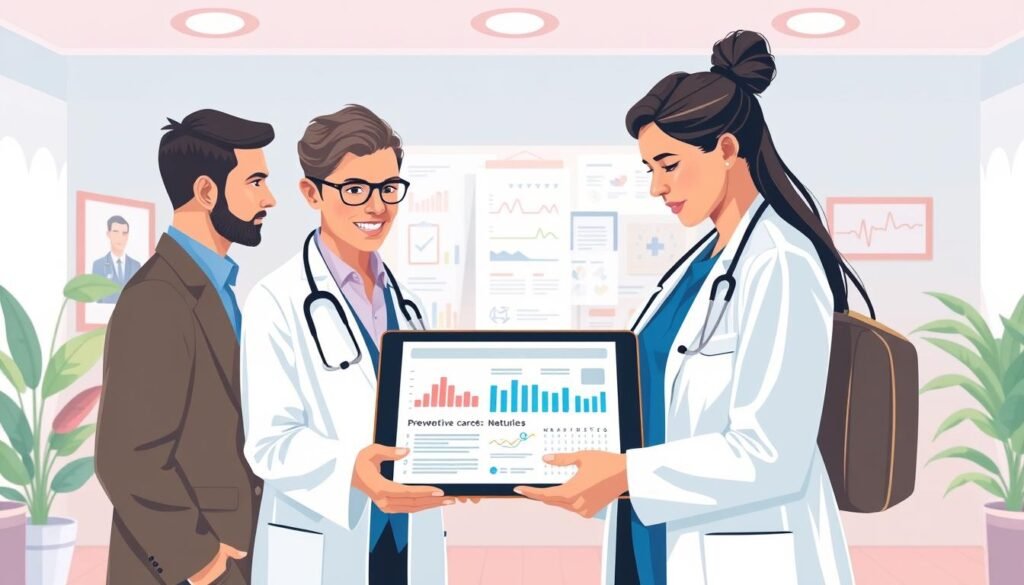
Preventative care starts with understanding key strategies. These include early detection, vaccinations, and health education. These help promote health and lower disease risk.
Early Detection and Risk Assessment
Early detection is key to catching health issues early. Routine screenings and assessments help healthcare providers. They use this data to create health plans for each patient.
Immunization and Vaccination Strategies
Vaccines are vital in fighting infectious diseases. They protect not just the individual but also the community. Staying up-to-date with vaccinations is essential for public health.
Health Education and Promotion of Healthy Lifestyles
Health education teaches about nutrition, exercise, and mental health. It helps people make better choices. This leads to a healthier life. For more on improving your health, check out personalized longevity programs.
| Strategy | Descripción | Impact on Health |
|---|---|---|
| Early Detection | Identifying health risks through assessments | Prevention of chronic diseases |
| Vaccination | Immunizations to prevent infectious diseases | Community and individual protection |
| Health Education | Teaching about healthy lifestyle choices | Informed decision-making and risk reduction |
Healthcare Guidelines for Effective Prevention
Following good preventive healthcare guidelines is key to better health for patients and the community. These guidelines stress the need for early detection through regular screenings. Primary care providers are vital in these efforts, making sure patients get the right tests and screenings.
Recommended Preventive Screenings by Age and Gender
Preventive screenings are essential for spotting health risks early. They vary by age and gender, fitting healthcare to each person’s needs. Here’s a table showing some common screenings:
| Age Group | Gender | Recommended Screenings |
|---|---|---|
| 18-39 | Both | Annual physical, Blood pressure check, Cholesterol test every 4-6 years |
| 40-49 | Both | Annual physical, Blood pressure check, Cholesterol test every 4-6 years, Skin cancer screening |
| 50-64 | Female | Mammogram, Pap smear every 3 years, Bone density test every 2 years |
| 50-64 | Male | Prostate cancer screening, Colonoscopy every 10 years |
| 65+ | Both | Annual physical, Blood pressure check, Screening for cognitive decline, Colonoscopy |
Role of Primary Care Providers in Preventative Strategies
Primary care providers are very important in preventive healthcare. They are the first people patients see, helping with screenings and vaccinations. They also guide patients on lifestyle changes, helping them understand and manage their health.
This support and monitoring help create a full plan for health and wellness.
Preventative Medicine Protocols: Approaches to Disease Prevention
Preventative medicine uses different strategies to improve health and lower disease rates. Healthcare experts find these methods very helpful for caring for patients.
Primary Prevention Techniques
Primary disease prevention is key to reducing illness. It involves steps taken before disease starts. This includes teaching healthy eating, encouraging exercise, and vaccines.
By tackling risk factors early, primary prevention builds a strong health base for communities.
Secondary and Tertiary Prevention Strategies
Secondary and tertiary prevention deal with different stages of disease. Secondary prevention looks for diseases early, using screenings. This leads to better treatment options.
Tertiary prevention aims to manage and improve existing diseases. It includes rehab and advanced treatments to stop disease from getting worse.
Quaternary Prevention in Medical Care
Quaternary prevention focuses on avoiding harm from too much medical treatment. It promotes careful healthcare by ensuring treatments are really needed. This keeps patient safety and well-being as the top priority.
The Role of Regular Check-Ups in Preventative Health
Regular check-ups are key to keeping you healthy. They help spot health problems early. This way, you can take action before it’s too late. By going for routine physical exams, you get many benefits for your long-term health.
Benefits of Routine Physical Exams
Going for routine physical exams has many advantages:
- Early detection of medical conditions that could escalate if left unmanaged.
- Personalized health recommendations based on your specific needs and lifestyle.
- Strengthening communication with your healthcare provider, which fosters a collaborative relationship.
- Access to essential screenings that help identify risks before they become major issues.
What to Expect During a Preventative Check-Up
At a preventative check-up, you can expect several things:
- A thorough discussion of your medical history, including previous health concerns.
- Vital sign assessments, which often include blood pressure and heart rate measurements.
- Physical examinations to evaluate various health metrics relevant to your well-being.
- Recommendations for necessary screenings based on age, gender, and risk factors.
- Guidance on nutrition, exercise, and lifestyle modifications that support healthy living.
Lifestyle Factors Impacting Preventative Health
Many lifestyle choices affect your health. Adding healthy habits to your day can help prevent and manage diseases. Eating right and exercising regularly are key to staying healthy. This part looks at important areas for good health management.
Nutrition and Exercise
What you eat and how much you move matter a lot for your health. Eating foods like fruits, veggies, whole grains, and lean meats can lower disease risks. Exercise boosts your body, heart health, and brain function.
Adding exercise to your day improves your strength and mood. It helps you feel more motivated and focused.
Smoking Cessation and Alcohol Moderation
Stopping smoking is key to avoiding health problems. Living smoke-free improves your lungs and cuts cancer risks. Drinking in moderation is also important to avoid liver damage and other health problems.
Choosing wisely about smoking and drinking helps you live healthier.
Mental Health and Stress Management Techniques
Mental health is just as important as physical health. Using stress-reducing activities like mindfulness, yoga, and meditation helps your mind. These activities can lower anxiety and depression, which can also affect your body.
Taking care of your mental health, along with your physical health, is essential for overall well-being.
| Factor | Impact on Health | Recommended Practices |
|---|---|---|
| Nutrition | Reduces chronic disease risk | Balanced diet, rich in whole foods |
| Exercise | Enhances physical fitness and mental clarity | Regular aerobic and strength-training activities |
| Smoking Cessation | Minimizes respiratory and cardiovascular diseases | Engage in quit programs or counseling |
| Alcohol Moderation | Prevents liver damage and addiction issues | Limit intake to recommended levels |
| Mental Health Support | Improves emotional resilience and physical health | Practice mindfulness and stress-relief techniques |
Challenges in Implementing Preventative Health Measures
The path to effective preventative health is filled with many challenges. It’s key for healthcare leaders to understand these hurdles to improve health results.
Access and Equity in Preventative Care
Getting to preventative healthcare is not the same everywhere. People in poorer areas often miss out on vital health services. This creates unfairness. To fix this, we need to make health services more available to everyone.
Barriers to Patient Participation and Engagement
Many people face barriers to joining in on preventative care. Some struggle to understand the value of health checks. Also, not trusting healthcare can make things worse, leading to fewer people taking part in health programs.
Cost Implications of Preventative Strategies
Money is a big factor in people’s health choices. Not everyone can afford to get vaccinated or have health screenings. So, we need to find ways to make these services more affordable.
Conclusión
We’ve shown how important it is to take care of your health before problems start. Regular check-ups and big lifestyle changes can make a big difference. They help you stay healthy and feel better.
Learning about health is key. It helps you follow the best ways to stay healthy. This knowledge is powerful.
Using preventative medicine helps you and saves money for everyone. Working together with your doctor is key. This way, you get the best care and stay healthy.
Starting your health journey is easy. Just learn about preventative medicine and work with your doctor. You’ll be on the path to better health and a brighter future.